
Medical Weight Loss
Why Obesity Treatment Requires Medical Expertise Beyond the Online Prescription Model
The rise of online weight loss platforms has created the impression that obesity treatment is as simple as filling out a questionnaire and receiving a weekly injection.
But obesity is far more complex than that.
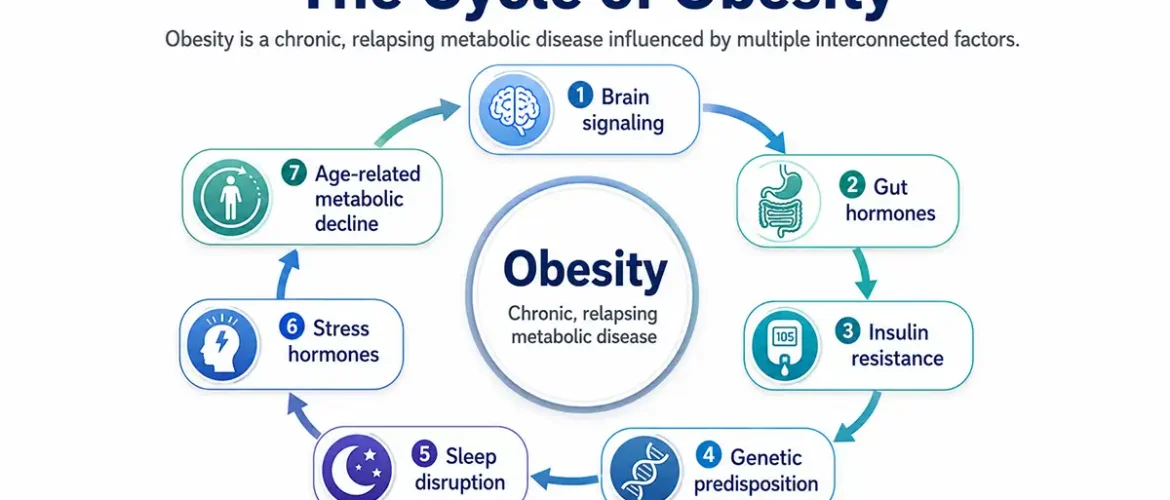
Obesity is a chronic, relapsing metabolic disease influenced by brain signaling, gut hormones, insulin resistance, genetics, sleep disruption, stress hormones, and age-related metabolic changes.
Treating it properly requires understanding all of those layers.
The Biology of Obesity Is Powerful
When someone loses weight, the body often fights back.
Hunger Can Increase
As weight decreases, the body may increase hunger signals, making continued progress harder than simple willpower advice suggests.
Satiety Can Decrease
Fullness signals may become less reliable, which can make appetite regulation more difficult during and after weight loss.
Metabolism Can Adapt
Metabolic rate can slow and energy efficiency can improve, which is one reason many diets fail long term.
A bariatric physician understands these compensatory mechanisms and plans treatment accordingly, using nutrition, resistance training, medication, and metabolic monitoring to counteract the body's natural defense of weight.
Nutrition Science Matters
There are thousands of diets: keto, intermittent fasting, low-fat, Mediterranean, carnivore, calorie counting apps, and many more.
The question is not, "Which diet is trending?"
The better question is: Which nutritional strategy works for your metabolism while preserving lean mass and maintaining metabolic rate?
- Protein optimization
- Muscle preservation
- Metabolic rate support
- Micronutrient monitoring
- Sustainable caloric deficits
This is not guesswork. It is clinical science.
Medication Is a Tool, Not a Trend
GLP-1 medications like Wegovy and Zepbound are powerful advances, but obesity medicine existed long before these drugs.
Depending on the patient, medications such as phentermine, Qsymia, or Contrave may be appropriate, either alone or in combination.
Sometimes GLP-1s are not tolerated. Sometimes they are contraindicated. Sometimes they are not covered by insurance. A trained obesity specialist knows how to pivot safely.
Monitoring Helps Prevent Long-Term Problems
Rapid, unsupervised weight loss can increase the risk of problems such as excess muscle loss, gallstones, nutrient deficiencies, and hormonal disruption.
At Rochester Medical Weight Loss, monitoring is part of the plan.
- Body composition
- Metabolic response
- Side effects
- Labs when indicated
- Long-term maintenance strategy
Because weight loss without maintenance planning is not success. It is temporary.
You Deserve Comprehensive Care, Not a Subscription
Obesity increases the risk of type 2 diabetes, hypertension, heart disease, sleep apnea, and fatty liver disease.
No one would treat those conditions solely through an anonymous online portal. Obesity deserves the same medical rigor.
Ready for a medical approach?
Your biology deserves expert care, not a shortcut.
At Rochester Medical Weight Loss, we combine medical expertise, metabolic monitoring, nutrition science, and personalized pharmacotherapy to help you pursue lasting results safely and sustainably.