
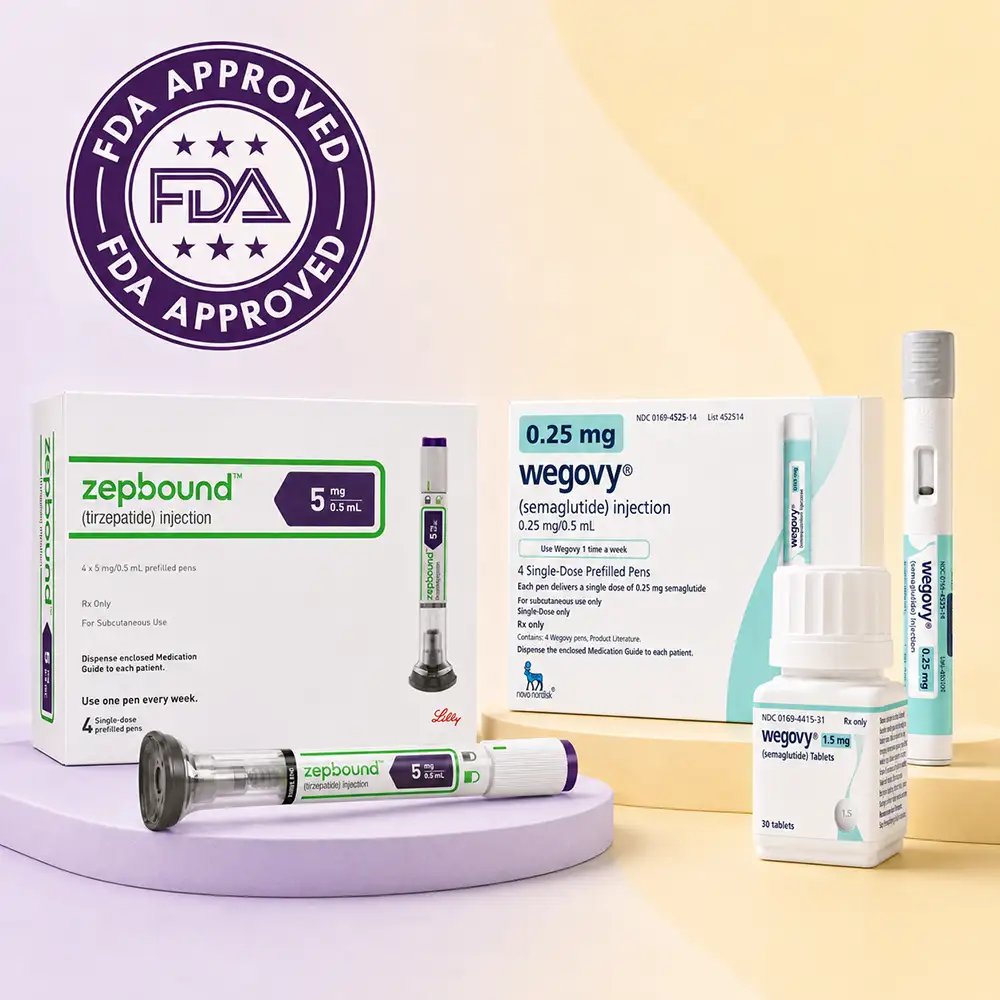
FDA-approved GLP-1 medications
FDA-approved medications are reviewed for safety, effectiveness, and manufacturing quality. They come with standardized dosing, labeling, storage requirements, and known safety warnings.
Medication-Assisted Weight Loss
Safety, sourcing, and what patients should know before starting treatment.
With the popularity of GLP-1 medications for weight management, many patients are now seeing offers for “compounded semaglutide” or “compounded tirzepatide” online. This page is here to help you understand the key differences and protect your safety.
At Rochester Medical Weight Loss, we believe obesity care should be physician-guided, monitored, and built on objective medical data, not a questionnaire, prescription, and subscription model.
The key difference
FDA-approved medications are reviewed for safety, effectiveness, and manufacturing quality. They come with standardized dosing, labeling, storage requirements, and known safety warnings.
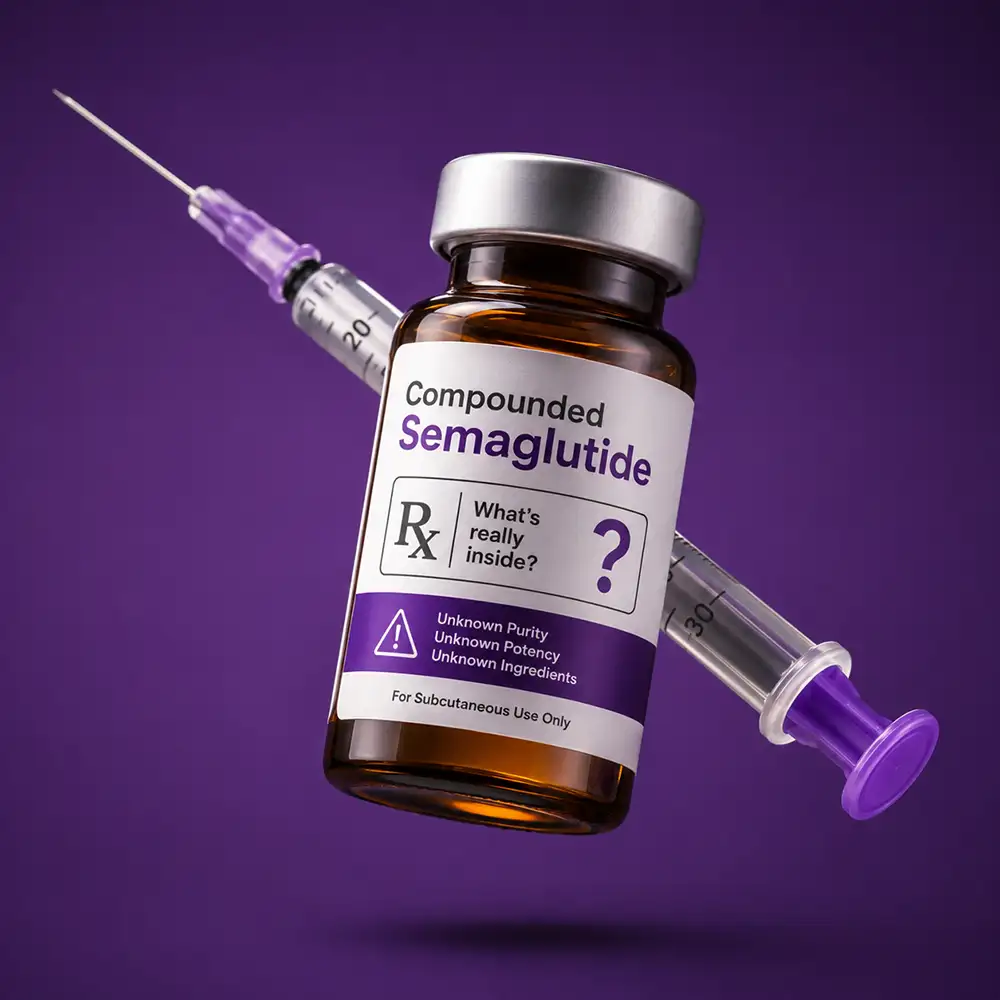
Compounded medications are not FDA-approved. Compounding can be appropriate in limited situations, such as when a patient's medical needs cannot be met by an FDA-approved product or when an FDA-approved drug is not commercially available.
Compounded drugs do not go through the same FDA review for quality, safety, and effectiveness before they are sold.
Why this has become a big issue
Online companies have mass-marketed compounded GLP-1s as “equivalents” or “alternatives” to FDA-approved drugs. This can create confusion and may put patients at risk when important details are unclear.
This is one reason we emphasize in-person evaluation, baseline testing, and ongoing monitoring. Obesity treatment is medical care, not a product purchase.
FDA warnings and safety concerns
The FDA has publicly raised multiple concerns with non-FDA-approved and compounded GLP-1 products. The biggest issues fall into a few categories.
Some compounded products are dispensed in multi-dose vials with instructions in “units” rather than milligrams. FDA has reported dosing mistakes where patients received five to ten times more than intended.
Compounded products can vary by pharmacy and batch. Multiple concentrations can increase confusion for both patients and prescribers.
Injectable GLP-1 medications typically require refrigeration. The FDA has received complaints about compounded GLP-1 shipments arriving warm or without adequate cooling.
The FDA has raised concerns about semaglutide sodium and semaglutide acetate because they are different ingredients than the active ingredient used in FDA-approved semaglutide products.
The FDA has warned about products sold online as “research use only” or “not for human consumption” that are still marketed to consumers with dosing instructions.
The FDA has announced enforcement steps and warning letters related to non-FDA-approved GLP-1 drugs and misleading marketing of compounded products.
Practical checklist
If you are considering GLP-1 therapy, or you are already using a compounded product, these green flags and red flags can help you know what to ask before taking the next dose.
If anything feels questionable, pause and ask your clinician before using the product.
Already using a compounded GLP-1?
Bring the vial, packaging, or clear photos of the label to your appointment so we can review the important details together.
What is actually in the vial and at what strength?
Are instructions clear in milligrams or mg/mL?
How quickly are doses being increased?
Was the medication shipped and stored properly?
What symptoms are showing up and when?
What follow-up and labs are appropriate?
If appropriate and available, we will discuss transitioning to an FDA-approved option and help you build a safer plan either way.
If GLP-1s are not right for you
GLP-1s are a major advance, but they are not the only evidence-based tool and they are not right for everyone. Some patients cannot use them due to contraindications, side effects, cost or coverage barriers, or personal preference.
Our approach
When medication is appropriate, Rochester Medical Weight Loss prioritizes safety, clarity, and long-term support.

We prioritize medications that have gone through FDA review for safety, effectiveness, and manufacturing quality.
Your treatment plan is based on your body, health history, goals, and follow-up needs.
Medication changes should be guided, not guessed.
Medication works best when paired with a plan for eating, habits, and long-term weight maintenance.
Body composition trends help us look at fat loss, muscle preservation, and metabolic health.
If compounding is ever considered, it should be for a specific clinical reason, with clear oversight.
Common questions
No. Compounded drugs are not FDA-approved, and the FDA does not review them for safety, effectiveness, or quality before they are marketed.
Compounded products can come in different concentrations and may be dispensed in multi-dose vials with “units” dosing instructions. That creates confusion when patients measure doses themselves.
Do not use it until you speak with your pharmacy and clinician. Temperature exposure can compromise quality.
No. They are not the same ingredient as the active ingredient used in FDA-approved semaglutide products, and the FDA has raised concerns about their use.
At Rochester Medical Weight Loss, we do not support the use of compounded GLP-1 medication. We can review what you have been prescribed and talk through safer FDA-approved options when appropriate and available.
Yes. There are other evidence-based tools and strategies that can be personalized to your body and your life.
Have questions about GLP-1 safety?