
Obesity Facts, Causes & Treatment FAQs | Medical Weight Loss
Obesity Medicine
Obesity Facts & FAQs
Obesity is both highly prevalent and widely misunderstood. For many individuals, weight gain is not simply a matter of "eat less, move more."
Weight is shaped by a complex interplay of biology, hormones, metabolism, sleep, stress, genetics, medications, and different stages of life.
At Rochester Medical Weight Loss, we treat obesity as a chronic medical condition and support patients with in-person, physician-guided care, not quick-fix subscriptions.
What is a Bariatrician?
Why Obesity Requires Medical Expertise
Obesity is one of the most prevalent chronic diseases, yet relatively few physicians receive specialized training in obesity medicine. This short video explains why expert, physician-guided care matters.
Obesity basics
Understanding Obesity as a Medical Condition
Is obesity really a disease?
Yes. Obesity is widely recognized by leading medical organizations as a chronic, relapsing disease that poses significant risks to health and requires long-term management.
This understanding is important because it shifts the conversation away from blame and toward evidence-based treatment. Obesity is not a lack of willpower; it is a medical condition that often requires a comprehensive, long-term approach.
What is the difference between overweight and obesity?
They are typically defined using BMI, or Body Mass Index. For adults, common BMI categories are:
- Healthy: 18.5 to 24.9
- Overweight: 25 to 29.9
- Class 1 Obesity: 30 to 34.9
- Class 2 Obesity: 35 to 39.9
- Class 3 Obesity: 40 or higher
Is BMI the best way to measure health?
BMI is a screening measure, not the whole story. The CDC notes BMI should be considered alongside other factors.
That is why many medical programs also look at waist circumference, body composition, labs, medication history, and overall health.
Does belly fat matter more than weight?
Often, yes. Carrying more fat around the waist can be linked to higher health risk. Common risk thresholds include more than 35 inches for women and more than 40 inches for men.
Not just willpower
Why Weight Loss Can Be So Hard to Maintain
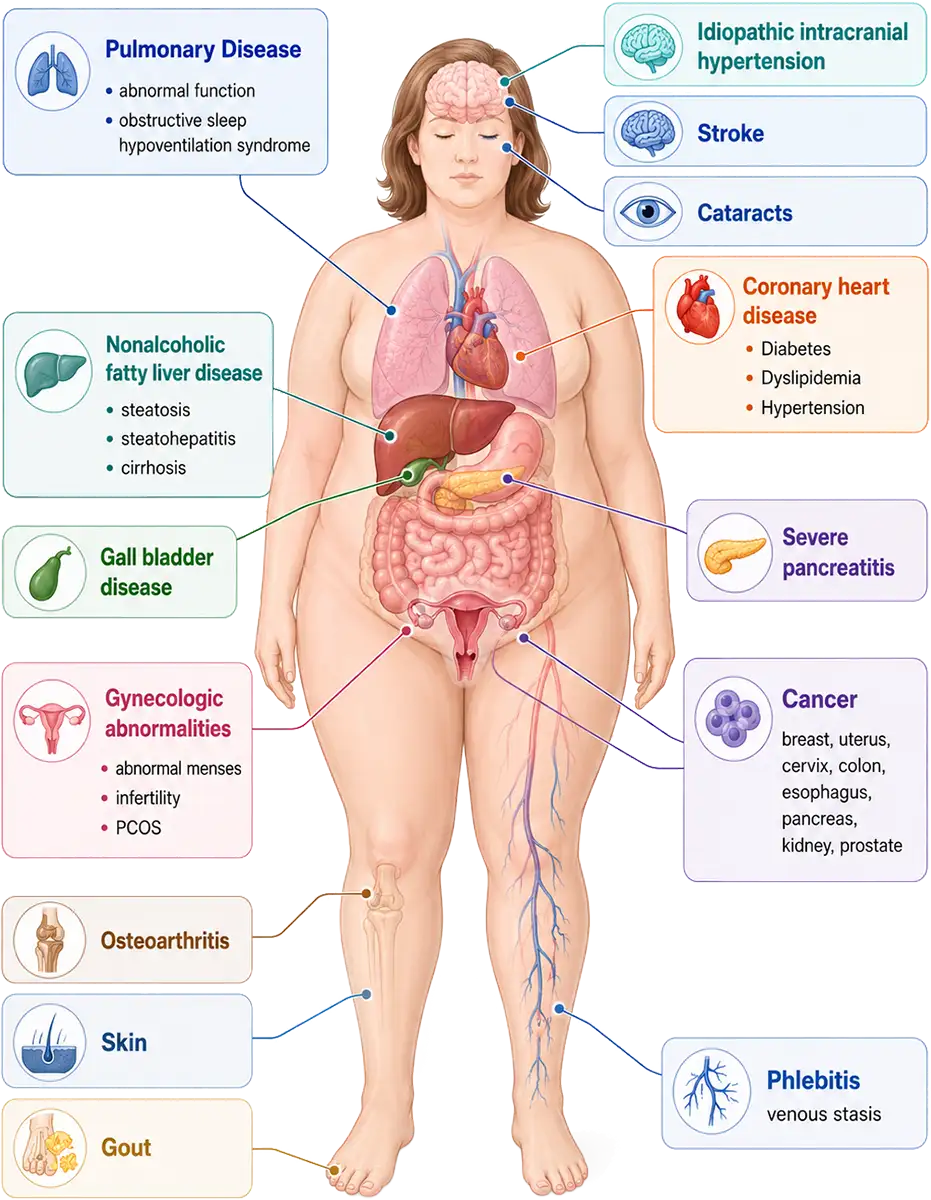
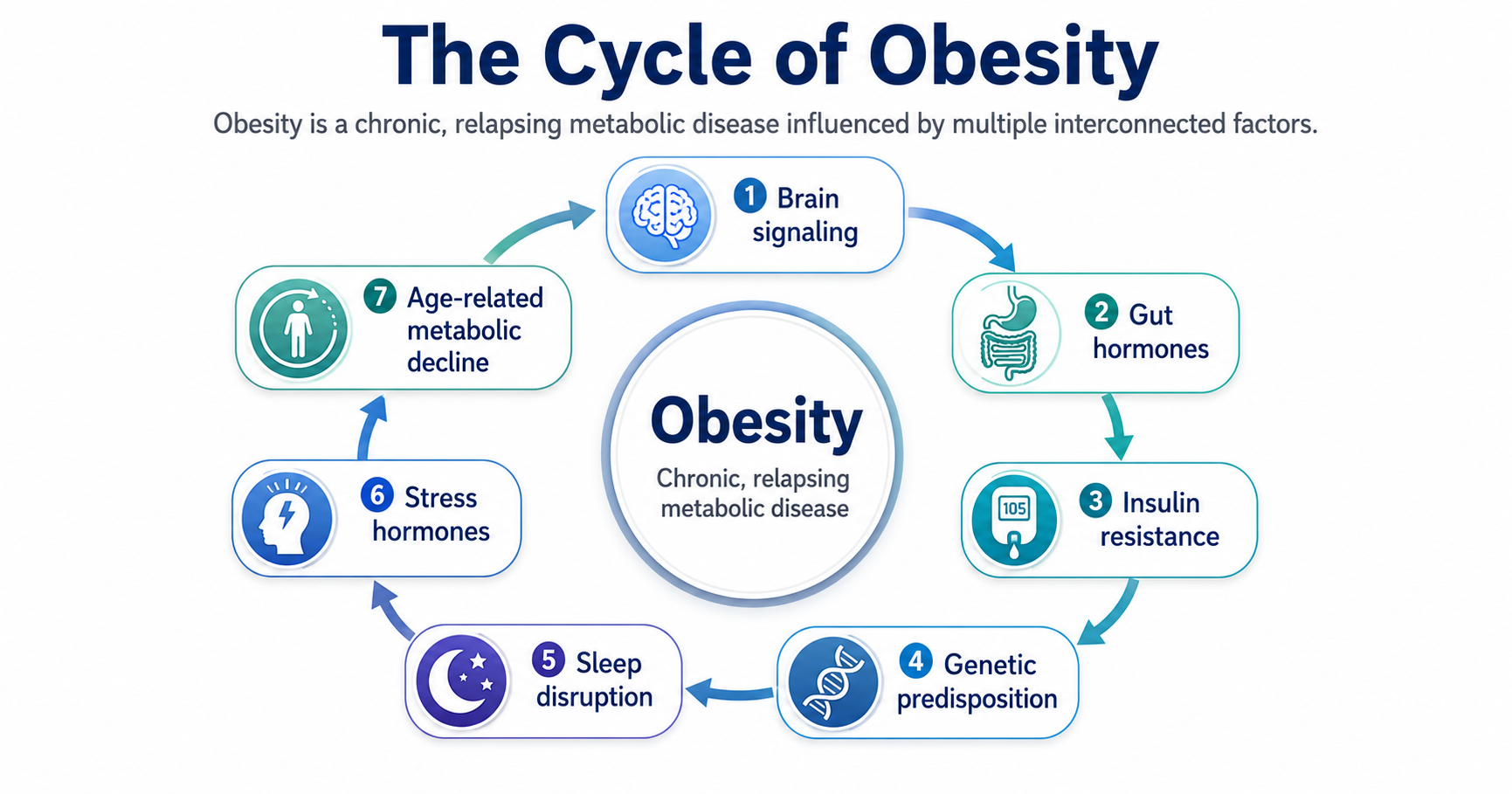
Your biology adapts. Many people experience stronger hunger signals and lower energy expenditure after weight loss. That is one reason short-term diets often lead to rebound.
Common contributors include sleep disruption, chronic stress patterns, insulin resistance, medications that promote weight gain, life stage changes like perimenopause, and food environments that make high-calorie choices very easy.
Health risks
What Obesity Can Impact
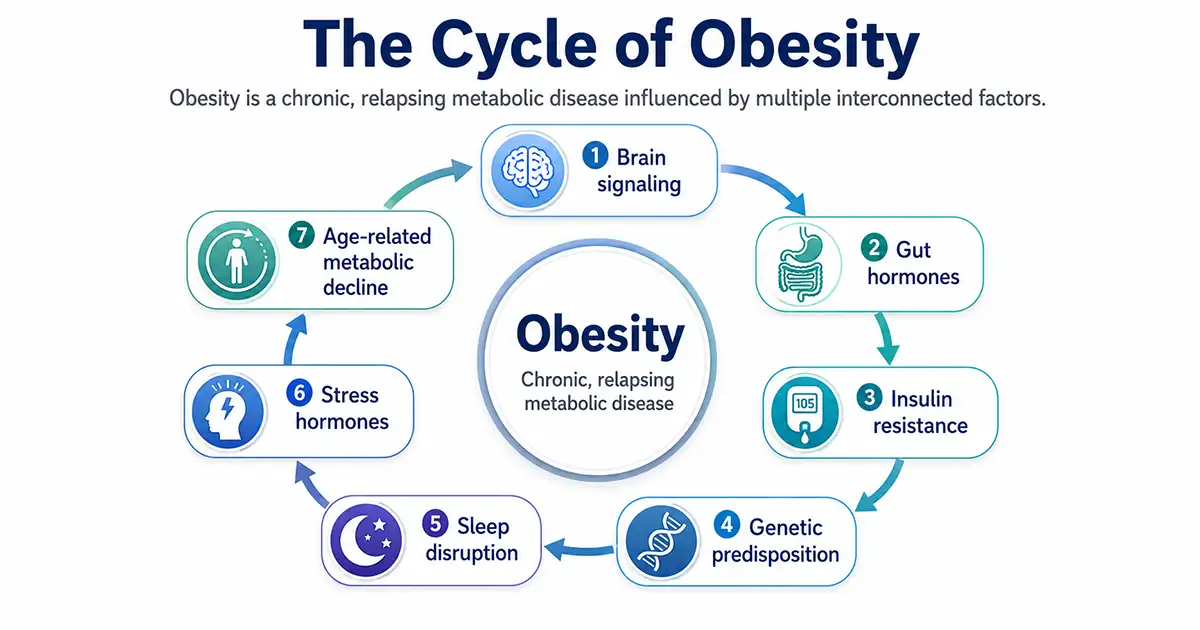
What health problems are linked with overweight and obesity?
Excess weight can increase the risk of serious health conditions by affecting metabolism, hormones, breathing, mobility, and inflammation throughout the body.
- Type 2 diabetes
- High blood pressure
- Heart disease and stroke
- Metabolic syndrome
- Fatty liver disease, including steatosis, steatohepatitis, and cirrhosis
- Sleep apnea and other breathing problems
- Osteoarthritis and gout
- Gallbladder disease
- Pancreatitis
- Kidney disease
- Pregnancy, fertility, and menstrual problems
- Increased risk of certain cancers
- Mental health effects and harm from weight bias
- Certain skin conditions associated with insulin resistance or skin-fold irritation
Having overweight or obesity does not mean a person will develop every condition listed. A medical evaluation can help identify individual risk factors and appropriate next steps.
Can small weight loss improve health?
Yes. Even modest weight loss can lead to meaningful health benefits. Losing about 5%-10% of initial body weight over six months is a common clinical goal associated with significant improvements in health.
Even a 3%-5% reduction in body weight can improve blood sugar control, lower triglycerides, and reduce the risk of developing Type 2 Diabetes.
Treatment options
What Actually Works?
Obesity treatment works best when medical tools are matched to your health history, goals, and long-term support needs.
What are evidence-based treatments for obesity?
Evidence-based care may include lifestyle changes, structured programs with regular counseling, medications when appropriate, and bariatric surgery when appropriate.
Are medications cheating?
No. Obesity is a disease, and medical tools can be appropriate. The key is appropriate prescribing, monitoring, and a long-term plan, not a one-size-fits-all prescription.
What about GLP-1 medications?
GLP-1 medications can be effective for many patients, but they are not right for everyone. They work best alongside nutrition strategies, monitoring, and maintenance planning.
Are compounded or unapproved GLP-1 products safe?
The FDA warns that unapproved versions do not undergo FDA review for safety, effectiveness, or quality. The FDA has also highlighted concerns about dosing errors, storage and shipping issues, and fraudulent products.
Is the New Direction® Weight Loss Program a fad or a quick fix?
No. The New Direction® Weight Loss Program is not a fad diet or a quick fix. It is a structured meal replacement program used as part of a physician-guided medical weight loss plan. The purpose is not to "skip real life" or rely on shakes forever; it is to create a clear, medically monitored structure that helps reduce guesswork, support nutrition, and build momentum safely.
At Rochester Medical Weight Loss, New Direction® may be used as a full or partial meal replacement option depending on your medical history, goals, and lifestyle. It is paired with ongoing monitoring, nutrition education, behavior support, and maintenance planning so patients have a path beyond the active weight loss phase.

Weight bias matters
Compassion Is Part of Medical Care
Weight stigma is a well-documented issue in healthcare and society. Many individuals feel judged, blamed, or defined solely by their weight rather than their overall health.
At Rochester Medical Weight Loss, our approach is grounded in compassion, respect, and evidence-based care. We understand your struggle, and most importantly, we hear you.
What makes RMWL different
In-Person, Physician-Guided Care
Many online platforms begin and end with convenience: a questionnaire, a prescription, and minimal long-term strategy. Obesity care deserves more than that.
- Whole-food meal planning
- New Direction meal replacements
- Medication options when appropriate
- Accountability and behavioral support
- Long-term maintenance planning
Not sure where to start?
Take the Diet Readiness Behavioral Questionnaire
The questionnaire helps identify barriers like stress eating, cravings, sleep disruption, and schedule overload so we can recommend the best-fit support.

References and authoritative sources
- CDC FastStats: Obesity and Overweight
- CDC NCHS Data Brief No. 508: Obesity and Severe Obesity Prevalence in Adults
- CDC: About Body Mass Index (BMI)
- CDC: Adult BMI Categories
- NHLBI: Heart-Healthy Living - Aim for a Healthy Weight
- NHLBI: Overweight and Obesity - Symptoms and Diagnosis
- NIDDK: Health Risks of Overweight and Obesity
- WHO: Obesity and Overweight Fact Sheet
Ready for support?
You deserve a plan built for your body and your life.
Get real medical guidance, real support, and a strategy designed around your health.