

Body Fat
Shows fat-related changes that weight alone can hide.

Technology for weight loss
At Rochester Medical Weight Loss, we don’t rely on the scale alone.
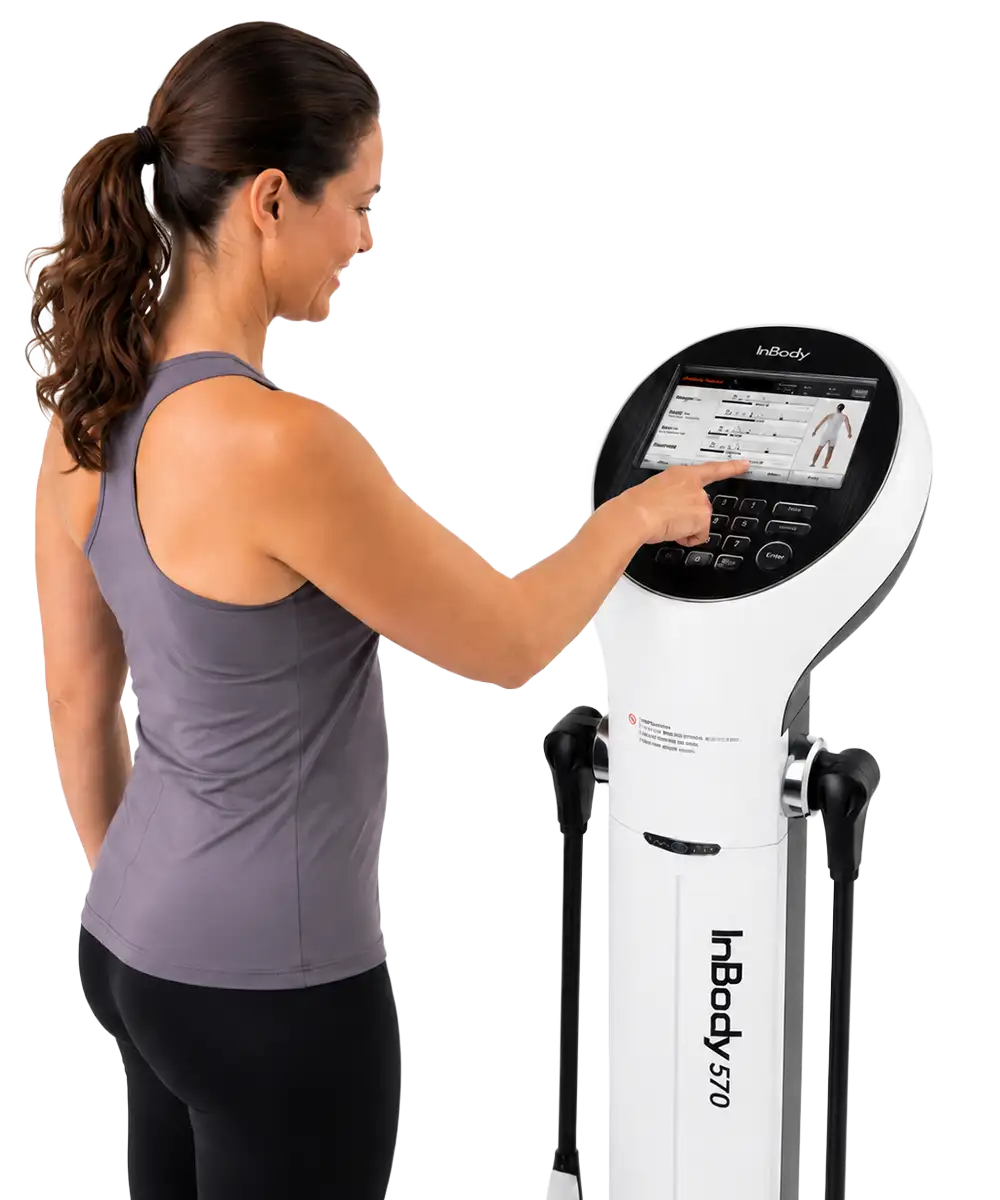
At your visits, we use the InBody 570 body composition analyzer to track meaningful changes over time — including body fat, lean mass, and body water — so your plan can be adjusted based on what your body is actually doing.
Body composition tracking used to help guide your plan.
See changes in fat, muscle, and water — not just weight.
A fast, non-invasive test during your visit.
Most useful when results are compared over time.
What InBody measures
Your InBody scan provides a detailed snapshot of your body composition, helping us look at what your weight is made up of — not just the number on the scale. This is especially helpful because weight alone can be misleading — muscle and fat can change even when the scale doesn’t.
Shows fat-related changes that weight alone can hide.
Helps track muscle and support healthy, sustainable loss.
Helps interpret normal fluctuations from hydration and timing.
Shows arms, legs, and torso so we can see where changes are happening.
In the news
Health experts are increasingly talking about the limits of BMI and scale weight alone. NPR recently reported on the growing use of body composition scans to better understand changes in fat and muscle — two important measures that a standard scale does not show clearly.
That is one reason we use the InBody 570 at Rochester Medical Weight Loss. It helps us look beyond a single number on the scale and track trends in body fat, lean mass, and body water over time.
Read the NPR articleWhy we use it
Your body composition trends help Dr. Conley and our team make better decisions over time — especially when the scale is not telling the full story.
Rochester Medical Weight Loss is not a substitute for your primary care physician.
When appropriate, we use FDA-approved medications as part of a comprehensive medical weight loss plan. Results vary; no specific outcome or amount of weight loss can be guaranteed.
How the scan works
InBody uses bioelectrical impedance analysis, also called BIA. The device sends a low-level electrical current through the body — you won’t feel it — and measures resistance. From that data, the system estimates muscle, fat, and water measurements in the limbs and torso.
You simply stand on the InBody 570 and hold the hand electrodes. No dunking, pinching, or discomfort.
The scan takes under a minute and can be repeated at visits so we can compare your results over time.
Hydration, timing, recent food, and exercise can affect results, so we focus on repeatable conditions and long-term trends.
Results you can review
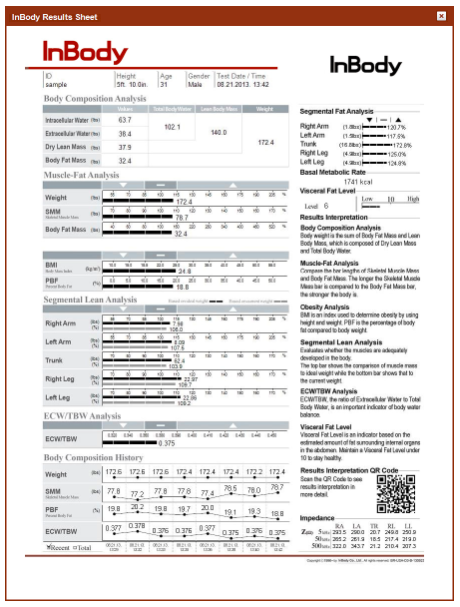
One of the most useful features of InBody is segmental analysis: the scan estimates how much lean mass and fat are in each major body segment.
This can help show how nutrition strategies and activity patterns may be affecting body composition — and it gives you more clarity than “up a pound / down a pound.”
Helps show whether muscle is being supported as weight changes.
Helps distinguish fat-related progress from changes in total body weight.
Helps interpret normal fluctuations from hydration, timing, or recent activity.
Frequently asked questions
Body composition tracking is most helpful when you understand what it can show — and what it should not be used to overpromise.
An InBody scan can provide more useful information than a standard scale, but it is not necessarily “more accurate” in the way people often think.
A regular scale only measures total body weight. It does not tell you what that weight is made up of — fat, muscle, water, or even inflammation. So if a patient is losing fat but gaining or preserving lean mass, the scale might not change much, which can be misleading.
Bottom line: an InBody scan is more informative and clinically meaningful when tracking progress beyond just weight.
Hydration, food intake, time of day, recent exercise, and even jewelry can affect results. That is why we focus on consistent testing conditions and long-term trends instead of overreacting to one reading.
No. InBody scans are still estimates, not a gold standard like DEXA for measuring body composition. Results can vary based on hydration status, recent exercise, food intake, and time of day.
While a single reading is not perfectly “accurate,” trends over time are very helpful when conditions are kept consistent.
Patients are scanned at every visit so we can benchmark progress and adjust the plan using measurable data.
No. The electrical current used is harmless and painless — so minimal you can’t feel it.
Safety note: Some implanted electronic devices may be a reason not to perform BIA scanning. Please confirm with the clinical team if this may apply to you.
Your plan should be built on real data, real support, and real medical guidance.