

Who Is a Good Fit?
Work-a-holic
Lose weight with a plan that fits a demanding schedule.
Travel. Meetings. Takeout. Stress. Long hours. You are not lazy. You are overloaded.
If your schedule runs your life, weight gain can happen quietly: meals on the go, inconsistent sleep, stress-driven cravings, and "I will start Monday" routines that never stick.
At Rochester Medical Weight Loss, we help busy professionals lose weight with an in-person, physician-guided plan designed for real life, not perfect meal prep and unlimited free time.

Signs This Might Be You
You might relate to this profile if:
- You work long hours, sit most of the day, and feel drained when you get home.
- You travel often and routines disappear around airports, hotels, and client dinners.
- You rely on takeout, snacks, or whatever is available between meetings.
- You feel stressed, sleep is inconsistent, and energy crashes happen.
- You have tried dieting, but it falls apart during busy weeks and guilt takes over.
Why This Pattern Happens
It is not solved by more discipline.
Busy schedules create predictable triggers. Most apps respond with generic rules. We respond with a personalized plan that accounts for your actual schedule.
Decision fatigue
Too many choices all day can make convenience foods the default.
Stress + sleep disruption
Cravings can increase, hunger signals can get louder, and energy can drop.
Sedentary workdays
Movement can feel like one more task when the day is already full.
Travel routines
Airports, hotels, and changing schedules can make consistency harder to maintain.
Business meals
Social meals and client dinners add up, and "just do not eat" is not realistic.
Build for real life
The plan has to reduce decision fatigue, protect momentum, and hold up during busy seasons.
Physician-Guided + Practical
How Rochester Medical Weight Loss helps busy professionals
This is medical weight management built for demanding schedules, travel, deadlines, and real-life constraints.
We start with a medical baseline
Before choosing a strategy, especially medication, Dr. Conley evaluates what is happening in your body.
- Complete physical exam
- Bloodwork
- InBody body composition analysis for fat, muscle, and body water
This helps us tailor the safest and most effective plan based on your health history, schedule, and goals.

We track progress beyond the scale
Work stress and travel can cause normal fluctuations in water weight. The scale can make you feel like nothing is working even when you are making progress.
We use body composition tracking to measure trends over time and guide adjustments, not guesswork.
Technology for Weight Loss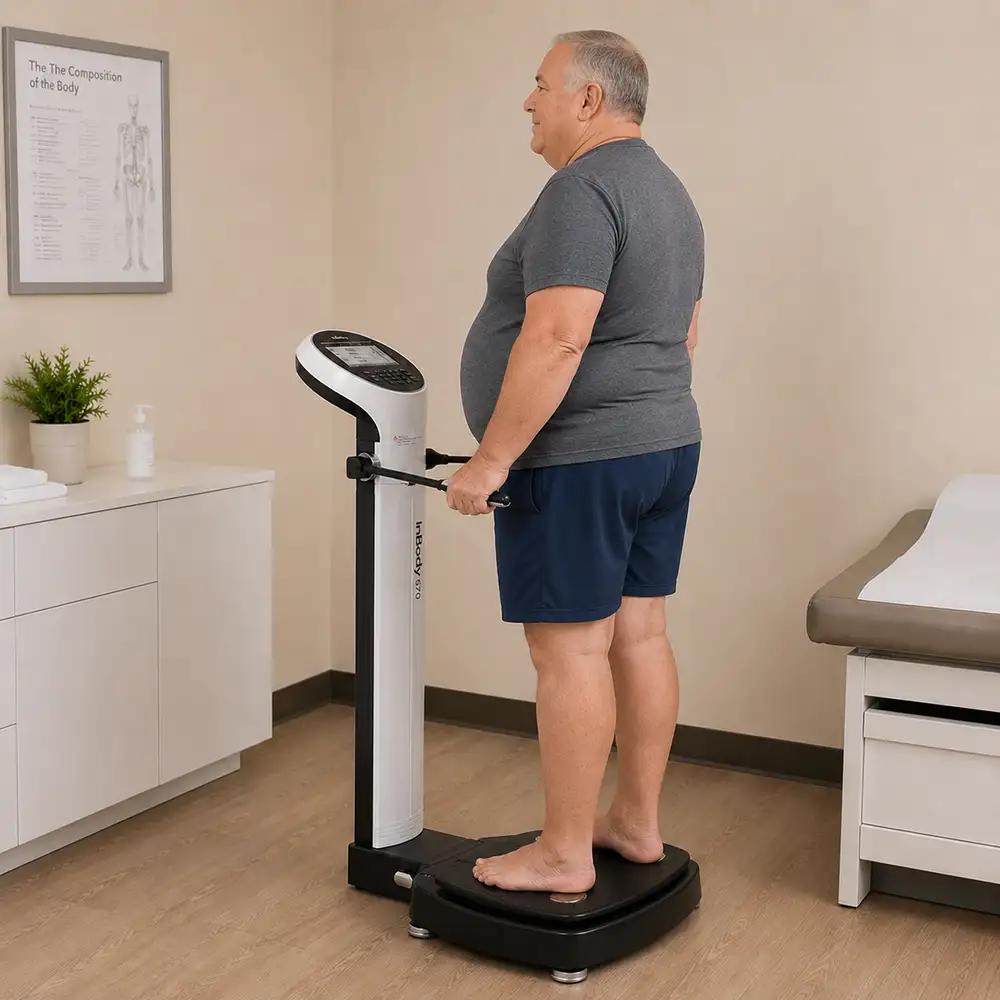
Your plan may include one or more tools
Busy professionals often do best with structured tools that reduce decision fatigue and make the next right choice easier.
Whole-Food Meal Plan
A flexible grocery-based framework with strategies for airports, hotel breakfasts, business lunches, late meetings, and long workdays.
Whole-Food Meal PlanNew Direction® Program
When your schedule is unpredictable, meal replacements can add structure and simplicity, full or partial, without relying on perfect planning.
New Direction® Program New Direction® FAQsMedication Options
For some patients, medication can reduce hunger, support satiety, and improve consistency when stress and schedule make appetite harder to manage.
Medication Options
Accountability + education
You do not need more information. You need a plan that is realistic and support that keeps you steady through busy seasons.
- Simple default meals you can repeat
- A travel and restaurant strategy that does not require perfection
- Stress-eating tools that do not rely on willpower
- A maintenance mindset early, so progress does not disappear when work gets intense

What Success Looks Like
Success is not a flawless week of meal prep.
It is having a plan that works when your schedule is full and your week does not go perfectly.
- A plan that works on your busiest weeks
- Better energy and fewer crashes
- Measurable progress beyond the scale
- A strategy you can maintain through travel, holidays, and deadlines
Results vary, but the goal is consistent: healthier weight loss with a plan you can stick with long term.
Not Sure Where to Start?
Take the Diet Readiness Behavioral Questionnaire
It helps identify patterns like stress eating, schedule overload, and decision fatigue so we can recommend the best mix of support.
Work-a-holic FAQs
Common questions from busy professionals
Do I have to meal prep to succeed?
No. We build a plan around realistic routines, including quick grocery options, repeatable meals, and strategies for busy days.
What if I travel a lot for work?
This profile is built for you. We create travel strategies for airport food, hotels, client dinners, and no-kitchen weeks so you are not starting over every time you leave town.
Do I have to use meal replacements?
No. Some busy professionals love the simplicity of meal replacements, others prefer a whole-food plan, and many use a combination. The approach is personalized.
Will you push medication?
No. Medication is one tool that may be appropriate for some patients. Dr. Conley makes recommendations based on your medical history, lab results, goals, and safety.
How do you measure progress when my weight fluctuates from stress and travel?
We track body composition trends, including fat, muscle, and water, so you get a clearer picture than the scale alone.
What is a good first step if I am not ready to schedule yet?
Take the Diet Readiness Questionnaire. It is a fast way to identify the barriers we should address first.
Your schedule is demanding.
Your plan should be smart, flexible, and medically guided.
Schedule a complimentary consult or call (585) 485-0802 to start building a plan that fits your real life.